Access Control System: Types, Benefits, and How to Choose the Right One
An access control system regulates who physically enters your premises — the lobby, the plant floor, the data centre, the vehicle gate — and when. Instead of a guard checking faces and a register at the door, the barrier itself verifies identity and opens only for authorised people, recording every movement.
Types of Physical Access Control Systems
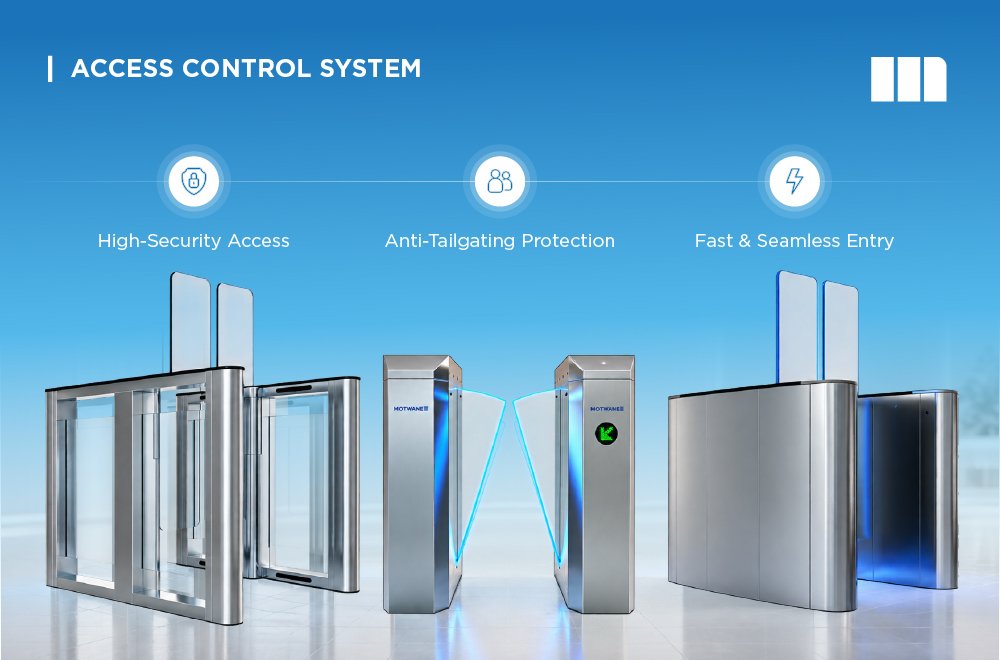
- Tripod turnstiles: Bi-directional, compact, cost-effective. The workhorse for factory gates and staff entrances.
- Flap barriers and speed gates: Fast-opening wings for high-footfall lobbies, airports and metro stations where queues cannot form.
- Mantraps: Interlocking dual doors where only one opens at a time — the standard for data centres, bank vaults and defence facilities.
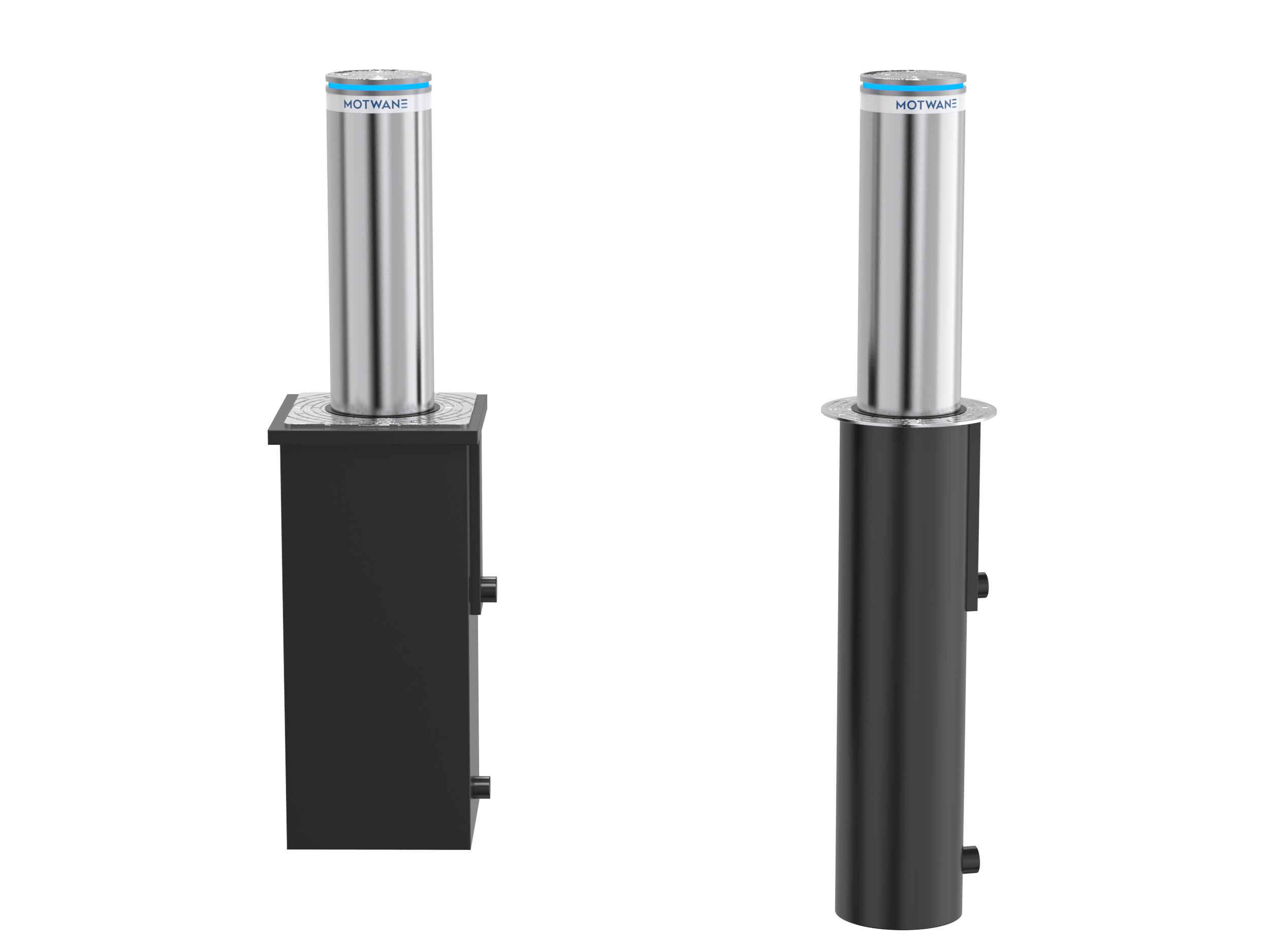
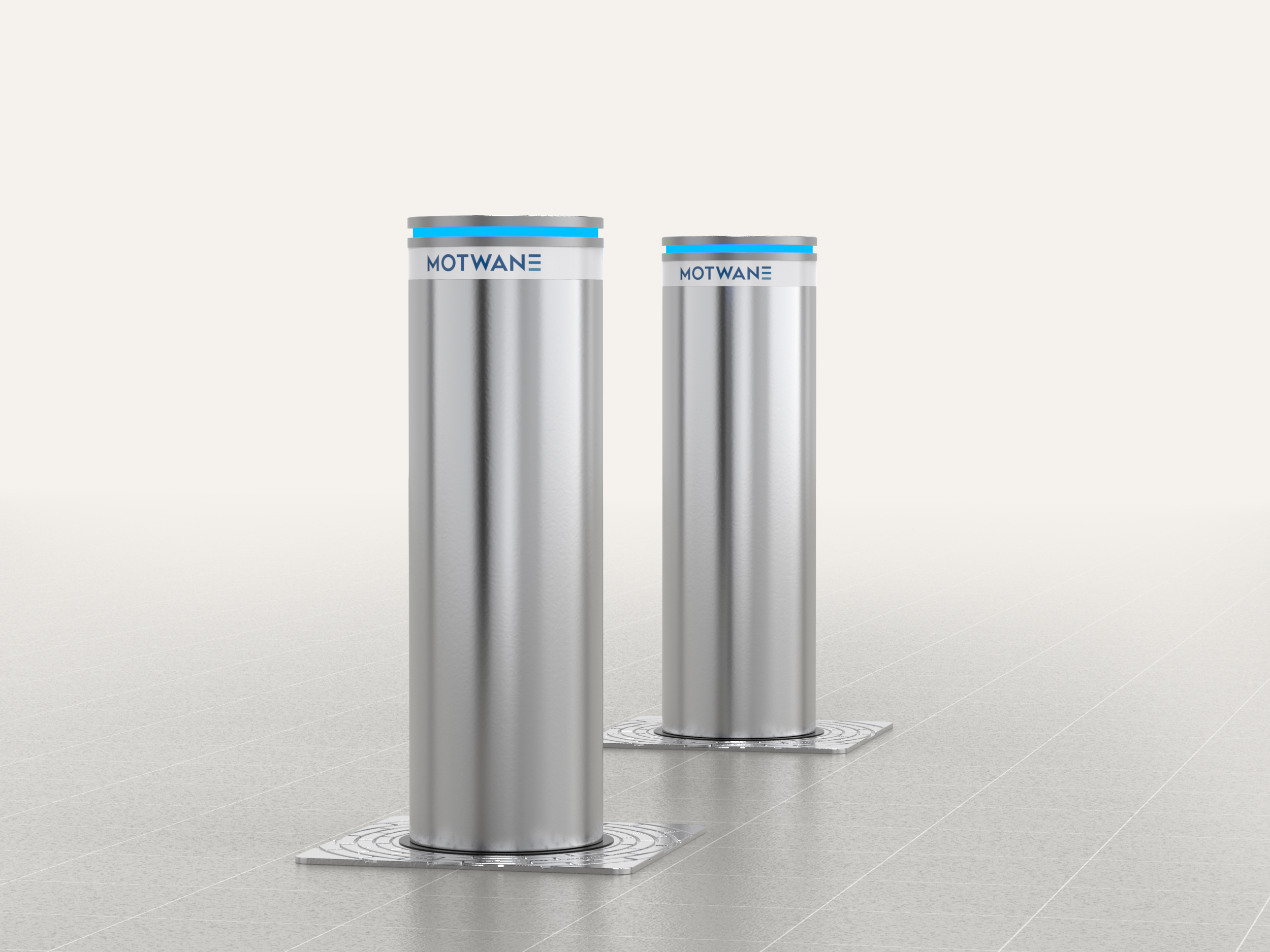
- Hostile vehicle mitigation: Boom barriers for routine traffic, hydraulic bollards and road blockers where the threat is a vehicle, not a person.
- Disability gates: Wide-lane units that keep the accessible entry inside the secure perimeter instead of bypassing it.
FAQ:
How a Physical Access Control System Works
Four parts do the work. A credential — an RFID card, a fingerprint, a face, or a QR ticket — identifies the person. A reader at the entrance captures it. A controller checks the credential against stored rules. And a physical barrier — a turnstile arm, a flap, a speed gate wing, a bollard or a boom — either opens or stays shut. The barrier is what makes the decision real. Software alone cannot stop someone walking through an open door.
FAQ: Key Benefits of Physical Access Control
A lost card is revoked in seconds — no rekeying, no lock replacement. Tailgating stops at the barrier, because a turnstile passes one person per authorisation. Every entry and exit is timestamped, giving you a defensible audit trail and accurate headcount for fire evacuation. Contractors can be restricted to shift hours automatically. And integration with CCTV means each entry event links to footage of the person who caused it.
FAQ: How to Choose an Access Control System
Start with throughput: a tripod turnstile handles around 30 people a minute, a speed gate considerably more. Then assess the threat — is it unauthorised walk-in, tailgating, or vehicle ramming? Each calls for different hardware. Check the environment: outdoor gates need IP-rated, corrosion-resistant construction that indoor lobby units do not. Confirm fail-safe behaviour on fire alarm, since local fire code will dictate whether barriers must drop open. Ask for anti-tailgating sensor specs rather than accepting the claim at face value.